Anime (pronounced [anime] listen (help·info) in Japanese, but typically pronounced /ˈænɪmeɪ/ or /ˈænɪmə/ in English) is an abbreviation of the English word "animation", originating in Japan. Although the term is used in Japan to refer to animation in general, in English usage the term most popularly refers to material originating from Japan, a subset of animation.
Anime is traditionally hand drawn, but computer assisted techniques have become quite common in recent years. The subjects of anime represent most major genres of fiction, and anime is available in most motion-picture media (television broadcast, DVD and VHS distribution, and full length motion pictures).
History
Main article: History of anime .
The history of anime begins at the start of the 20th century, when Japanese filmmakers experimented with the animation techniques that were being explored in France, Germany, the United States, and Russia.[1] The oldest known anime is in 1907, a three second clip of a sailor boy.[2]
By the 1930s, animation became an alternative format of storytelling compared to the underdeveloped live-action industry in Japan. Unlike America, the live-action industry in Japan remained a small market and suffered from budgeting, location, and casting restrictions. The lack of Western-looking actors, for example, made it next to impossible to shoot films set in Europe, America, or fantasy worlds that do not naturally involve Japan. Animation allowed artists to create any characters and settings.[3]
The success of Disney's 1937 feature film Snow White and the Seven Dwarfs influenced Japanese animators.[4] Osamu Tezuka adapted and simplified many Disney animation techniques to reduce the costs and number of frames in the production. This was intended to be a temporary measure to allow him to produce material on a tight schedule with an inexperienced animation staff.
During the 1970s, there was a surge of growth in the popularity of manga—which were often later animated—especially those of Osamu Tezuka, who has been called a "legend"[5] and the "god of manga".[6][7] His work and that of other pioneers in the field, inspired characteristics and genres that are fundamental elements of anime today. The giant robot genre (known as "Mecha" outside Japan), for instance, took shape under Tezuka, developed into the Super Robot genre under Go Nagai and others, and was revolutionized at the end of the decade by Yoshiyuki Tomino who developed the Real Robot genre. Robot anime like the Gundam and Macross series became instant classics in the 1980s, and the robot genre of anime is still one of the most common in Japan and worldwide today. In the 1980s, anime became more accepted in the mainstream in Japan (although less than manga), and experienced a boom in production. Following a few successful adaptations of anime in overseas markets in the 1980s, anime gained increased acceptance in those markets in the 1990s and even more in the 2000s.
Terminology
In Japanese, the English term animation is written in katakana as アニメーション (animēshon, pronounced [ɑnimeːɕoɴ]). The shortened term, anime (アニメ), emerged in the 1970s.[8] Both the original and abbreviated forms are valid and interchangeable in Japanese, but the shorter form is more commonly used.
The pronunciation of anime in Japanese, [ɑnime], differs significantly from English IPA: /ˈænɨmeɪ/, which has different vowels and stress. (In Japanese each mora carries equal stress.) As with a few other Japanese words such as saké, Pokémon, and Kobo Abé, anime is sometimes spelled animé in English, with an acute accent over the final e, to cue the reader that the letter is pronounced, not silent as would be expected in English. However, this accent does not appear in any commonly used system of romanized Japanese.
Word usage
In Japan, the term does not specify an animation's nation of origin or style; instead, it is used as a blanket term to refer to all forms of animation from around the world.[9][10] In English, dictionary sources define anime as "a Japanese style of motion-picture animation" or "a style of animation developed in Japan".[11] Non-Japanese works that borrow stylization from anime is commonly referred to as "anime-influenced animation" but it is not unusual for a viewer who doesn't know the country of origin of such material to refer to it as simply "anime". Some works are co-productions with non-Japanese companies, such as the Cartoon Network and Production I.G series IGPX or Ōban Star-Racers, which may or may not be considered anime by different viewers. DVD outlets in the UK are increasingly categorising animated material aimed at an older market as anime, regardless of style or country of origin.[citation needed] Such titles include Æon Flux, Hellboy and Spawn. In English-speaking anime fandom, it is generally accepted that an animated production can only be known as "anime" if it is an animated (normally 2D), professionally produced, feature film (though not necessarily a "movie") created by a Japanese company for the Japanese market.
In English, Anime can be used as a common noun ("Do you watch anime?") or as a suppletive adjective ("The anime Guyver is different from the movie Guyver"). It may also be used as a mass noun, as in "How much anime have you collected?" and therefore is not pluralized as animes.
Animation technique
Main article: Animation
The basics of anime is based on traditional animation. While anime is considered separate from cartoons, anime still uses multiple still images in rapid succession to produce the animated visual effect. Like all animation, the production processes of storyboarding, voice acting, character design, cel production, etc. still apply. With improvements in computer technology, computer animation increased the efficiency of the whole production process.
Anime is often considered a form of limited animation. That means that stylistically, even in bigger productions the conventions of limited animation are used to fool the eye into thinking there is more movement than there is.[ Many of the techniques used a comprised with cost-cutting measures while working under a set budget.
Anime scenes place emphasis on achieving three-dimensional views. Backgrounds depict the scenes' atmosphere.[ For example, anime often puts emphasis on changing seasons, as can be seen in numerous anime, such as Tenchi Muyo. Sometimes actual settings have been duplicated into an anime. The backgrounds for the Melancholy of Haruhi Suzumiya are based on various locations within the suburb of Nishinomiya, Hyogo, Japan.
Camera angles, camera movement, and lighting play an important role in scenes. Directors often have the discretion of determining viewing angles for scenes, particularly regarding backgrounds. In addition, camera angles show perspective. Directors can also choose camera effects within cinematography, such as panning, zooming, facial closeup, and panoramic.
Genres
Anime has many genres typically found in any mass media form. Such genres include action, adventure, children's stories, comedy, drama, erotica (more specifically ecchi or hentai), medieval fantasy, occult/horror, romance, and science fiction.
Most anime includes content from several different genres, as well as a variety of thematic elements. Thus, some series may be categorized under multiple genres. For example, Neon Genesis Evangelion might be considered to fall into the genres of post-apocalyptic, science fiction, mecha, and drama. A show may have a seemingly simple surface plot, but at the same time may feature a far more complex, deeper storyline and character development. It is not uncommon for an action themed anime to also involve humor, romance, and even social commentary. The same can be applied to a romance themed anime in that it may involve an action element, or in some cases brutal violence.
The following is a list of the major genres and designations that are specific to anime and manga.
* Action/Adventure primarily focuses on battles, war, and physical competition. Martial arts, weapon fighting, or other action oriented material are usually featured. Examples: Naruto or One Piece. * Drama primarily has a high degree of character development and emotional themes. Many center around relationship complications. Examples: Fushigi Yūgi or InuYasha. * Game Based primarily revolves around some sort of card or board game. Examples: Yu-Gi-Oh! or Hikaru No Go. * Horror use darker and/or supernatural themes. Examples: Vampire Hunter D series or Chrono Crusade. * Science fiction consists of futuristic elements, particularly featuring future science and technology. They can be drawn from current scientific studies and inventions or created to meet the needs of the world. Examples: Ghost in the Shell or Wings of Honneamise * Progressive or "Art films" are extremely stylized. Examples: Sayonara Zetsubō Sensei or Byōsoku 5 Centimetre.
« Poslednja izmena: 01. Feb 2008, 22:00:07 od crni scorpion »
IP sačuvana
"Vlast i vlasnistvo se mogu razdovjiti na izvesno vreme, ali nikako zauvek jer ce vlasnistvo, shvativsi koliko je razdvajanje bolno, odmah kupiti vlast ili ce vlast osvojiti vlasnistvo a time i bogatstvo."
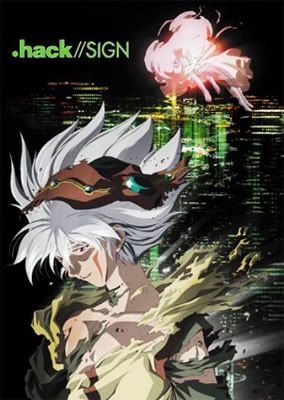
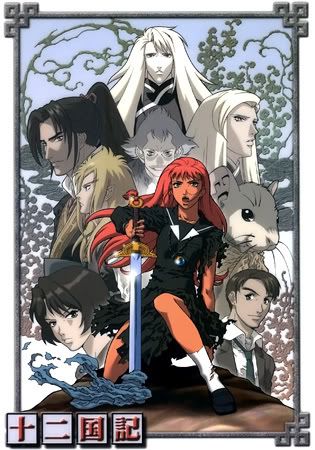
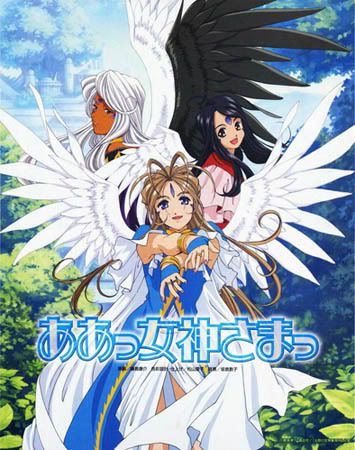
1.str. - Limanality Ova, .hack//Sign, 12 Kingdoms, 3x3 Eyes, Afro Samurai, Ah My Goddess : Tatakau Tsubasa, Ai Yori Aoshi, Ai Yori Aoshi ~Enishi~...
2.str. - AIKa R-16: Virgin Mission, Air (TV series, Movie), Air Movie, Aishiteruze Baby, Akahori Gedou Hour Rabuge, Akane Maniax, Amaenaideyo, Amazing Nurse Nanako, Angel Links, Angel Sanctuary...
3.str. - Aria : The Natural, Aria The Origination, Aria The OVA: Arietta, Armored Trooper VOTOMS - Pailsen Files, Avatar - The Last Air Bender, Avatar Book 1, Avatar Book 2, Avatar - The Last Air Bender Book 3, Ayakashi (New), Ayashi no Ceres...
4.str - Bakuen Campus Guardress, Bakuretsu Tenshi (Burst Angel) TV series + OVA, BALDR FORCE EXE Resolution OVA, Bamboo Blade, Banner of Stars III, Banner Of The Stars I, Banner Of The Stars II, Basilisk, Battle Programmer Shirase, hack//Roots...
5.str - Berserk, Binbou Shimai Monogatari, Binchou-tan, Black Cat, Black Lagoon, Blame !, Blood +, Blue Dragon, Blue Drop: Tenshi-tachi no Gikyoku, Blue Gender, ...
6.str. - Boku wa Imouto ni Koi wo Suru, Bokusatsu Tenshi Dokuro-chan, Bokusatsu Tenshi Dokuro-chan Second, Bomberman Jetterz, Boys Be, Buzzer Beater, Byousoku 5cm (5 Centimeters per Second), Candy Boy (ONA), Canvas 2, Card Captor Sakura...
"Vlast i vlasnistvo se mogu razdovjiti na izvesno vreme, ali nikako zauvek jer ce vlasnistvo, shvativsi koliko je razdvajanje bolno, odmah kupiti vlast ili ce vlast osvojiti vlasnistvo a time i bogatstvo."
Genres: Adventure, Drama,Fantasy,Science Fiction Age rating: Older Children (May contain mild bad language, bloodless violence)
An accident occuring in "The World", will be solved in the net framework space, with the OVA "Liminality". Mai and Kasumi collapse in the real world, however, only Mai recovers, leaving Tomonari in a coma. The incident will be investigated through the real world point of view. You will continue to come closer to the truth of the accident within the game while investigating from the real world in the OVA.
« Poslednja izmena: 01. Feb 2008, 22:16:45 od crni scorpion »
IP sačuvana
"Vlast i vlasnistvo se mogu razdovjiti na izvesno vreme, ali nikako zauvek jer ce vlasnistvo, shvativsi koliko je razdvajanje bolno, odmah kupiti vlast ili ce vlast osvojiti vlasnistvo a time i bogatstvo."
Age rating: Older Children (May contain mild bad language, bloodless violence) Genres: Adventure, Drama, Fantasy, Mystery, Science Fiction, Shounen
Plot Summary: Amidst a popular online role playing game in the near future, characters try to play out the goals they set for entertainment and passing of time. The World as the RPG is called is one with a setting of monsters, player characters and dungeons. Tsukasa is a detached and introverted character that has a number of mysteries about his player character. Many weird happenings seem to suround Tsukasa and his involvement in a rare item called 'The Key Of The Twilight' sparks Tsukasa'a meeting with different online characters and the befriending of thier real life counterparts; All without ever meeting face to face in reality. What is strange about Tsukasa is that he can't seem to log out of The World. Subaru and Silver Knight of The Crimson Knights continue to look for proof of why Tsukasa can not log out or the existance of The Key Of The Twilight. Meanwhile Bear, Mimiru, and BT as Tsukasa's friends try to help him understand who he really is and how he can return to the real world.
"Vlast i vlasnistvo se mogu razdovjiti na izvesno vreme, ali nikako zauvek jer ce vlasnistvo, shvativsi koliko je razdvajanje bolno, odmah kupiti vlast ili ce vlast osvojiti vlasnistvo a time i bogatstvo."
Plot Summary: Yoko Nakajima, an unhappy high school student, is one day suddenly faced with a strange man who swears allegiance to her. After a battle with demon-like beasts, he then takes her to another world along with two of her classmates. There, her appearance has changed and she can understand the language even though her classmates cannot. But their status as "Kaikyaku" (people who come from Earth) makes them hunted fugitives, so they wander the land of the 12 countries, simply trying to survive and to figure out the reason why they were brought to this world.
« Poslednja izmena: 01. Feb 2008, 22:25:39 od crni scorpion »
IP sačuvana
"Vlast i vlasnistvo se mogu razdovjiti na izvesno vreme, ali nikako zauvek jer ce vlasnistvo, shvativsi koliko je razdvajanje bolno, odmah kupiti vlast ili ce vlast osvojiti vlasnistvo a time i bogatstvo."
Age rating: Teenagers (May contain bloody violence, bad language, nudity) Genres: Adventure, Fantasy, Horror, Romance
Plot Summary: 3X3 Eyes is the story of a young man named Yakumo Fuuji, who through a strange series of events becomes the immortal slave of the last of a race of 3 Eyed immortals. The immortal absorbs his soul to save his life, making him immortal in the process. Now, he begins a journey with the female immortal in an attempt to find a way of becoming human. Of course, there are many complications along the way, not the least of which being that the immortal is a female with a split personality, one achingly cute and the other being no-nonsense destructive power, and the romances that develop between. Format : Realmedia MQ
"Vlast i vlasnistvo se mogu razdovjiti na izvesno vreme, ali nikako zauvek jer ce vlasnistvo, shvativsi koliko je razdvajanje bolno, odmah kupiti vlast ili ce vlast osvojiti vlasnistvo a time i bogatstvo."
Genres: Adventure,Science Fiction Age rating: Mature (May contain sex, drugs, and extreme graphic violence)
Plot Summary : With his unusually long blade, a cold-blooded attitude, and an occasional drag of a hand-rolled cigarette Afro is a lone warrior who roams the land knowing no love and shedding no tears. Upon his head is a cloth band with a mark that ranks him as the #2 fighter in the world. But in truth, he lives only to wreak revenge on the man who killed his father in a duel. That man, ironically happens to be the world's top fighter, who wears another cloth headband marked by the symbol of the #1!
« Poslednja izmena: 01. Feb 2008, 22:36:39 od crni scorpion »
IP sačuvana
"Vlast i vlasnistvo se mogu razdovjiti na izvesno vreme, ali nikako zauvek jer ce vlasnistvo, shvativsi koliko je razdvajanje bolno, odmah kupiti vlast ili ce vlast osvojiti vlasnistvo a time i bogatstvo."
Plot Summary: An Angel Eater has been freed in Heaven. Since Goddesses and Angels share body and soul, losing your angel results in going into shock for the Goddess. Lind goes to Earth to protect Belldandy and the others unknowing that it is a trap.
"Vlast i vlasnistvo se mogu razdovjiti na izvesno vreme, ali nikako zauvek jer ce vlasnistvo, shvativsi koliko je razdvajanje bolno, odmah kupiti vlast ili ce vlast osvojiti vlasnistvo a time i bogatstvo."
Type: TV Episodes: 24 Year: 2002 (11.04.2002 till 26.09.2002)
Hanabishi Kaoru is a junior in college, living out an ordinary life of studying and friends. One day, he meets a girl whom he discovers is his old friend Sakuraba Aoi, a girl whom he was supposed to have an arranged marriage with. Together, the two rediscover aspects of their pasts that they had tried to suppress while setting out in their lives with one another. Unfortunately, there are a lot of unwanted guests that keep lurking around in their lives. How is their love going to unfold?
"Vlast i vlasnistvo se mogu razdovjiti na izvesno vreme, ali nikako zauvek jer ce vlasnistvo, shvativsi koliko je razdvajanje bolno, odmah kupiti vlast ili ce vlast osvojiti vlasnistvo a time i bogatstvo."
Genres: Comedy, Drama, Romance, Slice of Life Age rating: Teenagers (May contain bloody violence, bad language, nudity)
Two years after meeting Aoi, Kaoru and gang are still up to their normal habits. Koaru now in grad school and the tenents being as rowdy as ever what will become of Aoi and Kaoru's love. Two years has passed since Aoi and Kaoru were freed from the bonds of their families. They continue to live their normal lives with their usual friends in their house.
« Poslednja izmena: 01. Feb 2008, 22:44:15 od crni scorpion »
IP sačuvana
"Vlast i vlasnistvo se mogu razdovjiti na izvesno vreme, ali nikako zauvek jer ce vlasnistvo, shvativsi koliko je razdvajanje bolno, odmah kupiti vlast ili ce vlast osvojiti vlasnistvo a time i bogatstvo."
Poslednji odgovor u temi napisan je pre više od 6 meseci.
Temu ne bi trebalo "iskopavati" osim u slučaju da imate nešto važno da dodate. Ako ipak želite napisati komentar, kliknite na dugme "Odgovori" u meniju iznad ove poruke. Postoje teme kod kojih su odgovori dobrodošli bez obzira na to koliko je vremena od prošlog prošlo. Npr. teme o odredjenom piscu, knizi, muzičaru, glumcu i sl. Nemojte da vas ovaj spisak ograničava, ali nemojte ni pisati na teme koje su završena priča.